
Konsumimi i pijeve të ëmbla mund të rrisë me 46% numrin e dhëmbëve të prekura nga kariet, sidomos mes fëmijëve dhe të rinjve.
Fëmijët
dhe të rinjtë që pinë lëngje me sheqer, si ato me gaz, apo lënge
frutash të ambalazhuara rrezikojnë rëndë shëndetin e dhëmbëve të tyre,
në raport me ata persona që nuk i preferojnë këto pije, citon noa.
Ky
rezultat u arrit, pasi u mbajtën në vëzhgim 16 800 të rinj, mes moshës 5
dhe 16 vjeçare, ku u vu re se 56% e tyre pinin të paktën një pije të
tillë në ditë, ku u vu re se në 46% të tyre dhëmbët ishin më të prishur,
kishte dhëmbë të rënë dhe me karie.
Sipas
Armfield, problemi i karieve në dhëmbë çon edhe në probleme që lidhen
me kushtet fizike, shëndetësore apo sociale të njeriut. /24oreinfo/kohaislame
Showing posts with label Health. Show all posts
Showing posts with label Health. Show all posts

Një studim nga hulumtuesit në Spitalin e Fëmijëve në Çikago vlerësoi rezultatet e dhënies së pyetësorëve te shqyrtimit të prindërve të fëmijëve nën moshën 5 vjeçare epileptike.
Rezultatet treguan se më shumë se 75 për qind e fëmijëve të studiuar gjithashtu kishin një vonesë në zhvillim dhe 41 për qind kishin autizëm.
Sipas Anne Berg dhe Breanne Fisher të cilët paraqitën studimin e tyre në takimin e Shoqërisë Amerikane për Epilepsi, asnjë nga fëmijët nuk shfaqen vetëm shenja për autizëm.
"Gjetjet tona sugjerojnë gjithashtu që të gjithë fëmijët në klinikën për epilepsi duhet të shqyrtohen edhe për këto autizëm."

Duke ngrënë tre hurma një orë para mëngjesit, drekës dhe darkës do të dobësoheni më lehtë. Sipas studimit të realizuar nga spitali i Kërkimit dhe Edukimit Umraniye bëhet e ditur se me anë të dietës e cila konsiston në ngrënien e tre hurmave një orë para mëngjesit, drekës dhe darkës do ta keni më të lehtë të dobësoheni.
Me dietën e bërë duke ngrënë nga tre hurma një orë para mëngjesit, drekës dhe darkës është vërtetuar se dobësoheni më shpejt sepse hurma të jep ndjesinë e ngopjes dhe përshpejton lëvizjet e zorrëve. Tani ky fakt do të argumentohet me anë të të dhënave mjekësore.Të dhënat tregojnë se hurma është një produkt i pasur me vlera ushqyese. 100 gr hurmë përmban 65 gr karbohidrate, 2 gr proteina dhe 0,2 gr yndyra. Ngaqë përmban sheqer fruktozë nuk përbën asnjë rrezik as për të sëmurët me diabet. Është i vetmi produkt i cili përmban sheqer, proteina dhe yndyra.

Dieta
Te ushqehesh ne menyre te shendetshme ndonjehere kerkon ndonje
sakrifice, por edhe nje baze te mire informacioni. Po, sepse kur flitet
per dieta dhe nje ushqyerje korrekte te zakonshme, kemi nevoje per
informacionet e duhura qe na ndihmojne te hame me mire dhe se dyti te
mbrojme shendetin tone. Kete duhet ta bejme pavaresisht planeve te
momentit per t’u dobesuar apo shendoshur. Duhet te jemi te informuar per
ushqimet qe na bejne mire dhe per ato qe jane te demshme. Pasi ta kemi
bere kete, nuk eshte fare e veshtire, mjafton vetem te konsumojme ato me
te shendetshmet e te heqim dore nje here e pergjithmone nga patatet e
skuqura apo embelsirat me shumice. Ju sugjerojme ne vazhdim 5 rregulla
te arta te ushqyerjes, te dobishme per te menaxhuar ne menyren me te
mire regjimin tone te te ushqyerit.
1. Mos e lini asnjehere pa e ngrene mengjesin
Pas kalimit te nje nate dhe clodhjes se metabolizmit, gjeja e pare
qe duhet te beni ne mengjes eshte qe te vini stomakun ne pune duke
ngrene nje mengjes te pasur, i cili do t’ju jape energjine e duhur per
ta perballuar sa me mire diten. Nje mengjes perfekt mund te jete nje
qull, ndoshta i pergatitur me fruta te fresketa ose te thata. Dritherat,
ne fakt, pavaresisht se jane ushqimi i preferuar i te dashuruarve me
mengjesin, duhet te shmangen per sheqerin e shumte qe permbajne.
2. Mbajeni organizmin te hidratuar
Simptomat per te kuptuar se kur organizmi eshte i dehidratuar jane:
lodhje e pazakonte, marramendje, oreks konstant, lekure e thate, urine
me e erret se zakonisht dhe nje letargji e pergjithshme. Nga ana tjeter
jeni shume me fat nese konstatoni qe nje pjese e madhe e organizmit tuaj
eshte e hidratuar, apo ka perberje uji. Eshte me te vertete esenciale
qe organizmi juaj te hidratohet vazhdimisht me uje apo lengje te tjera
natyrale si per shembull suko frutash pa sheqerna.
3. Nje test per 20 dite
Provoni te beni nje test: hani 20 ushqime te shendetshme, por te
ndryshme, cdo dite per gjate 20 diteve. Ne kete menyre, pervecse do te
kenaqni oreksin tuaj, do t’i siguroni organizmit nje game te gjere
substancash ushqyese si vitamina minerale etj.
4. Limitoni kripen
Nje keshille e dobishme jo vetem per shendetin, por edhe per nje
forme te shkelqyer fizike, eshte ajo qe duhet te limitoni (ose me mire
akoma te eliminoni) perdorimin e kripes ne kuzhine. Nje konsumim i lart i
kripes, pervecse favorizon mbajtjen e ujit, shkakton uljen e
temperatures trupore, nje rritje te presionit te gjakut dhe,
rrjedhimisht, nje mosfunksionim te sistemit kardiovaskular.
5. Evitoni te darkoni shume vone
“Mengjes si mbret, dreke si princ dhe darke si i varfer”. Jo
gjithmone theniet e njohura jane te gabuara. Ne kete rast, ne fakt,
eshte nje keshille mjaft e mire qe te evitoni se ngreni nje vakt te
bollshem perpara se te shkoni te flini gjume, sepse organizmi arrin ta
marre me shpejt energjine e ushqimit gjate pjeses se pare te dites, kur
natyrisht punon me shume.
Frutat dhe perimet me ushqyese
Eshte e nevojshme te hani nje shumellojshmeri frutash dhe
zarzavatesh cdo dite per te perfituar maksimumin e lendeve ushqyese,
keshtu qe mos ngurroni te ushqeheni ndryshe dhe ne menyre te pasur.
Brokolit jane nje burim fantastik i pashtershem me vitamine C,
betakaroten, acidi folik, hekuri dhe potasi. Permbajne gjithashtu
perberes te quajtur indole, qe ndihmojne ne parandalimin e kancerit. Te
fresketa apo te kaluara ne mikrovale, sepse po te ziejne, ato i humbin
vlerat qe ofron vitamina C.
Shpargu eshte nje ushqim cudiberes me veti te spikatura mjekesore.
Shpargu eshte i pasur ne acid folik dhe vitamina C, E dhe betakaroten.
Lakra e bardhe eshte nje tjeter ushqim i pasur ne vitamina C, K, E dhe
potas. Permban gjithashtu betakaroten, fibra, tiamine dhe te tjera
substanca per parandalimin e kancerit

Shumë studime kanë zbuluar efektet pozitive të të qeshurit në trupin e njeriut. Përveç kësaj për të konfirmuar të gjitha përfitimet psikologjike nga të qeshurit, shkenca e shërimit përmes të qeshurit, e quajtur “guelotologie”, gjeti gjithashtu disa përfitime shumë interesante fiziologjike. Hidhni një sy në 7 mëposhtme për të gjetur arsye të mira për ia plas të qeshurit:
Ulje e ndjesisë së dhimbjes. Disa studiues kanë zbuluar se pas 10 minutave të qeshura të forta, ka një reduktim të dhimbjes.
Forcim i sistemit imunitar. Nga eksperimentet e shumta është vërtetuar se e qeshura shkakton ndryshime të rëndësishme neurologjike.
Përmirësimin e funksionit njohëse. Duket se e qeshura rrit performancën tonë mendore dhe aftësinë për të mbajtur informata.
Parandalimin e sëmundjeve kardiovaskulare. E qeshura aktivizon qarkullimin e gjakut duke reduktuar rrezikun e problemeve kardiovaskulare, sidomos infarktit.
Rrit kapacitetin e mushkërive. E qeshura bën lëvizjen e organeve të barkut dhe shkakton, rritjen e elasticitetit të mushkërive.
Lehtëson stresin dhe lodhjen.

Ato rezultate janë krahasuar me të dhënat e 3.600 fëmijëve të shëndetshëm. Është vërtetuar edhe sesi ndotja më e madhe e ajrit lidhet me rritjen shtesë të rrezikut nga sëmurja nga kanceri te fëmijët e asaj moshe. Rritja e rrezikut nga sëmurja ka qenë 5 për qind për leu kemi ndërsa deri në 15 për qind për kancer të testiteve dhe vezoreve.
Shkencëtarët shtojnë se duhet të bëhen analiza shtesë para se të konfirmohet lidhja shkaktuese ¬pasuese mes ndotjes së ajrit dhe rrezikut më të madh nga kanceri te fëmijët. /Telegrafi/
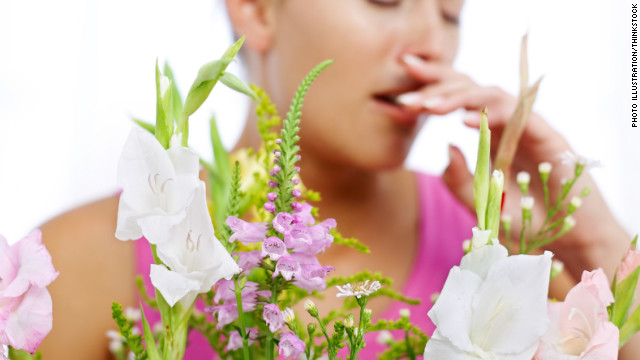
Editor's note: Dr.
Clifford Bassett is the medical director of Allergy and Asthma Care of
New York. He is on the faculty of the NYU School of Medicine and a
clinical professor of medicine and otolaryngology at the Long Island
College Hospital and SUNY Brooklyn.
(CNN) -- With allergy season in full swing, sufferers are looking to reduce their pesky and irritating symptoms.
But what really works, and what doesn't? Here are some tips about finding relief:
Q: Can a spoonful of honey build immunity to seasonal pollens?
A: Many allergy sufferers have heard this one before, but sadly, the facts seem to indicate otherwise.
Here's why: Bees love the
larger flowers, resulting in more pollen sticking to the plants and not
traveling in the air. Any of the pollen that does get airborne tends
not to be the exact type of pollen that triggers most seasonal allergy
symptoms.
So even locally made honey is not something you can count on to help reduce sneezing and itchy, watery eyes.
This theory was confirmed by a 2002 University of Connecticut Health Center study,
which indicated that no type of honey afforded any allergy-fighting
benefit when compared to a placebo containing syrup. In other words,
honey did not relieve seasonal allergy symptoms.
"Seasonal allergies are
usually triggered by wind-borne pollens, not by pollens spread by
insects," said Dr. Stanley Fineman of the American College of Allergy, Asthma and Immunology. "So it's unlikely that honey collected from plants that do not cause allergy symptoms would provide any therapeutic benefit."
Q: Can having pets worsen seasonal allergies?
A: Pollen
can cling to the fur of dogs and cats, which can quickly be transferred
back inside your home, landing on carpet, upholstery and your bedding.
This is especially true when your pet frolics and rolls around in grass
and other outdoor areas.
Think about using a
vacuum with a HEPA filter to remove allergy-containing particles from
floors and carpeting. You may also wish to limit your pet from resting
on your bed, especially after he or she has spent time outdoors on a
high-pollen day.
Q: Can one really reduce allergy symptoms, even on a high-pollen day?
A: Yes.
The first real step is "knowing" specifically what you are allergic to.
While people are tempted to say they have spring tree pollen allergies,
it is helpful to know the exact types of trees you are sensitive to --
that way you can watch the pollen counts more efficiently.
There are different ways
to have allergy tests performed. The first, typically used by
nonspecialists, is the allergy blood test.
The second type of test,
which is generally more sensitive and performed by allergy specialists,
is skin tests. They are virtually painless and can provide meaningful
results, quickly and safely right in the allergist's office.
Where do allergies come from?
Once you know the
specifics of your exact allergy profile, a customized solution can be
found to prevent and successfully manage your seasonal allergies.
Besides medications and allergy injections, we also provide other common
sense strategies for our patients:
-- Keep windows closed and run your air conditioner on the "do not re-circulate" setting.
-- Wear a pollen mask when gardening and/or mowing the lawn.
-- Remove your shoes when entering your home.
-- It is best to avoid hanging laundry outdoors.
-- Don't forget to take your prescribed allergy medication before outdoor exposure, or regularly during allergy season.
Another thing to keep in
mind: In general, the day's lowest pollen levels occur during early
morning and slowly rise throughout the day until early evening. Other
factors, such as winds and dry weather, favor higher pollen levels.
Q: Can some healthy foods worsen your allergy symptoms?
A: Yes!
Despite the fact that fruits and vegetables are generally regarded as
healthy foods for allergy and asthma sufferers, they may worsen your
seasonal allergies, because of a cross-reaction between seasonal tree,
grass and weed pollens.
Some sufferers may experience the effects of "oral allergy syndrome,"
described as itchiness and tingling of the mouth and throat, as well as
potential worsening of allergy symptoms, after eating various
cross-reacting raw fruits and vegetables.
In some cases, peeling
and/or cooking the food may reduce symptoms by changing or altering some
of the culprit substances present in these foods.

Moms can be convinced to change their minds about having their babies before they are at full term, according to a study released this week in the journal Obstetrics & Gynecology.
For years, medical groups have been encouraging moms to wait until
their baby has remained in utero for 39 weeks. At the same time, the
number of women choosing to induce labor or have an elective cesarean
section for nonmedical reasons has been rising.Just last month, the American College of Obstetricians and Gynecologists reiterated its recommendations, encouraging moms to avoid early elective deliveries.
The study
Twenty-five hospitals in California, New York, Florida, Illinois and Texas implemented what's called the Big 5 State Prematurity Initiative, a program that used a tool kit designed to help hospitals eliminate elective deliveries of babies before 39 weeks of gestation unless medically necessary. Thirty-eight percent of births in the United States occur in these five states.
In just one year, there was a remarkable decrease. "These 25 hospitals overall saw an 83% drop in early-term deliveries," said Dr. Edward McCabe, a pediatrician and medical director for the March of Dimes Foundation, which developed the tool kit and partly funded the study. In January, nearly 28% of babies were born at 37 or 38 weeks, but by December, that number had dropped to 5%. There was a corresponding increase in births at 39 to 41 weeks, McCabe said.
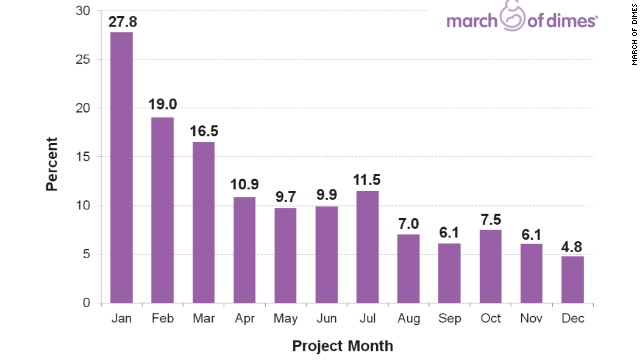
This table shows the drop in early-term deliveries.
A cultural change has to occur for more hospitals to help mothers wait just a little longer, he said. With this tool kit, labor and delivery nurses were empowered to tell moms-to-be if there was a medical reason to deliver the baby before 39 weeks.
Why women deliver early
Often it can be a matter of convenience. A doctor may be going out of town, and the mother may want to ensure that doctor delivers her baby. Or grandma and grandpa may be coming a little earlier than the due date. Some couples may even try to have their baby before the end of a year, so they can claim a tax credit.
They may think that it's OK, because they've been told or have heard that 37 weeks of gestation is full term.
What is full term?
"It wasn't until recently that we recognized that there are more complications and mortality at 37 weeks," McCabe said.
"Important growth and development occur throughout pregnancy – all the way through the final few weeks," according to the Centers for Disease Control and Prevention. "If the mother is healthy, current research indicates that delivery should not be scheduled before 39 weeks' gestation."
According to a 2007 CDC study, infant mortality risk for babies born at 37 or 38 weeks is 1.5 times higher than babies born at 39 to 41 weeks.
"That's a 50% higher risk of infant mortality," McCabe said. Mortality at 39 to 41 weeks is very low, he said.
In 2009, researchers showed that delivering a baby a week or two before 39 weeks, or even three or four days before that milestone is reached, can have a significant impact on the child's health. For one, babies need every extra day for their lungs to mature.
McCabe said he hopes more hospitals will consider banning elective inductions and C-sections unless medically necessary. One way for this to change is to make it clearer what full term really is.
"The nomenclature is changing," he said. "Thirty-seven and 38 weeks are now considered 'early term.' It's not yet official, but there is a movement toward calling 39 to 41 weeks full term. It's in the literature; people are using it."
It's hard to say exactly how many women choose to induce labor before 39 weeks. In 2008, 23% of babies were born because the mother's labor was induced, according to the American College of Obstetricians and Gynecologists. It's unclear, however, how often labor was induced before full term, as the data is gleaned from medical records that don't specify at what gestational age a baby is born.
Data from a 2006 report from the National Institutes of Health found an estimated 2.5% of all babies in the United States were delivered by C-section at the mother's request.
The American government’s goal of vaccinating young girls against the human papillomavirus has been disappointing, with less than a third of teenagers
having completed a full course of HPV vaccine. But now the United
States can look to Australia, which six years into a successful
nationwide HPV vaccination campaign has experienced a sharp decline in
the number of new cases of genital warts among young men and women.
 Russell Kirk/Merck, via Getty Images The HPV vaccine protect against the human papillomavirus.
The country, one of the first to establish a nationally financed HPV
vaccination program for girls and young women, has also seen a decrease
in the number of cases of cervical abnormalities, a precursor to
cervical cancer.
Russell Kirk/Merck, via Getty Images The HPV vaccine protect against the human papillomavirus.
The country, one of the first to establish a nationally financed HPV
vaccination program for girls and young women, has also seen a decrease
in the number of cases of cervical abnormalities, a precursor to
cervical cancer.
Australia’s program, which started in 2007, offers free HPV vaccination to girls who are 12 and 13 years old, and catch-up programs for girls and women under 26. The vaccine protects against genital warts as well as cancers of the cervix, head and neck.
The vaccine is typically administered in three doses, beginning around age 12. In 2010, coverage rates for girls that age in Australia’s school-based programs reached 83 percent for the first dose, 80 percent for the second dose and 73 percent for the third.
The findings suggest that Australia’s program, which has experienced little of the resistance that has stymied vaccination efforts in the United States, has been an overwhelming success, said Basil Donovan, an author of the study and a professor at the University of New South Wales in Sydney.
As part of the new research, which was published in BMJ, a British medical journal, Dr. Donovan and colleagues compared rates of HPV-related diseases in the three years before the vaccine program began and in the four years afterward. The study included data on nearly 86,000 people who visited clinics in Australia between 2004 and 2011.
The researchers found that diagnoses of genital warts among young women ages 12 to 26 plummeted 59 percent in the two years after the program began. For men in the same age group, genital warts cases dropped 39 percent. During the same period, there was also a striking decline in the rate of high-grade cervical abnormalities in teenage girls, a sign that a decline in cervical cancer cases may be on the horizon.
Although a driving force behind the vaccine recommendations is the prevention of cancer, it is too soon to measure an impact there. The incubation period from HPV infection to the development of an HPV-related cancer is typically two to three decades. But for genital warts, the incubation period is about three months.
The findings showed a trend of sharply decreasing diagnoses among younger age groups. The rate of genital warts cases among girls younger than 21, for example, fell to less than 1 percent in 2011 from about 12 percent in 2007, a decline of nearly 93 percent. Among women ages 21 and 30, the decline in diagnoses was roughly 70 percent, to just 3 percent in that age group in 2011 from about 11 percent in 2007. At the same time, however, there was no significant decline in cases among women 30 and over.
A similar pattern was seen in every age group of men, with the infection rate falling more and more sharply with decreasing age. Dr. Donovan said it was clear that the high rate of immunization among young women was protecting young men who have not been vaccinated, a phenomenon known as herd immunity.
“The mathematical modelers told us that a large decline was to be expected, but we tend not to believe it until we see it,” Dr. Donovan said. “We were particularly surprised to see a 93 percent drop in genital warts in young women when only 85 percent were vaccinated. This suggests that the herd immunity that is protecting men is, in turn, also protecting unvaccinated women.”
Australia’s vaccination campaign sharply contrasts with the program in the United States where, studies show, parents often opt out of HPV vaccination for their children, calling the vaccine unnecessary, citing concerns about its safety or saying they have difficulty explaining to their teenagers what the shots are for. Some parents have also hesitated over fears that HPV vaccination might give their teenagers license to have sex, even though studies have countered the notion that the vaccine alters sexual behavior.
“There was little resistance to the HPV vaccine in Australia, just the usual anti-vaccination people and a few religious groups,” Dr. Donovan said. “But even the religious groups have gone quiet, and I suspect that many of them are quietly getting their children vaccinated.”
READ MORE
Russell Kirk/Merck, via Getty Images The HPV vaccine protect against the human papillomavirus.Australia’s program, which started in 2007, offers free HPV vaccination to girls who are 12 and 13 years old, and catch-up programs for girls and women under 26. The vaccine protects against genital warts as well as cancers of the cervix, head and neck.
The vaccine is typically administered in three doses, beginning around age 12. In 2010, coverage rates for girls that age in Australia’s school-based programs reached 83 percent for the first dose, 80 percent for the second dose and 73 percent for the third.
The findings suggest that Australia’s program, which has experienced little of the resistance that has stymied vaccination efforts in the United States, has been an overwhelming success, said Basil Donovan, an author of the study and a professor at the University of New South Wales in Sydney.
As part of the new research, which was published in BMJ, a British medical journal, Dr. Donovan and colleagues compared rates of HPV-related diseases in the three years before the vaccine program began and in the four years afterward. The study included data on nearly 86,000 people who visited clinics in Australia between 2004 and 2011.
The researchers found that diagnoses of genital warts among young women ages 12 to 26 plummeted 59 percent in the two years after the program began. For men in the same age group, genital warts cases dropped 39 percent. During the same period, there was also a striking decline in the rate of high-grade cervical abnormalities in teenage girls, a sign that a decline in cervical cancer cases may be on the horizon.
Although a driving force behind the vaccine recommendations is the prevention of cancer, it is too soon to measure an impact there. The incubation period from HPV infection to the development of an HPV-related cancer is typically two to three decades. But for genital warts, the incubation period is about three months.
The findings showed a trend of sharply decreasing diagnoses among younger age groups. The rate of genital warts cases among girls younger than 21, for example, fell to less than 1 percent in 2011 from about 12 percent in 2007, a decline of nearly 93 percent. Among women ages 21 and 30, the decline in diagnoses was roughly 70 percent, to just 3 percent in that age group in 2011 from about 11 percent in 2007. At the same time, however, there was no significant decline in cases among women 30 and over.
A similar pattern was seen in every age group of men, with the infection rate falling more and more sharply with decreasing age. Dr. Donovan said it was clear that the high rate of immunization among young women was protecting young men who have not been vaccinated, a phenomenon known as herd immunity.
“The mathematical modelers told us that a large decline was to be expected, but we tend not to believe it until we see it,” Dr. Donovan said. “We were particularly surprised to see a 93 percent drop in genital warts in young women when only 85 percent were vaccinated. This suggests that the herd immunity that is protecting men is, in turn, also protecting unvaccinated women.”
Australia’s vaccination campaign sharply contrasts with the program in the United States where, studies show, parents often opt out of HPV vaccination for their children, calling the vaccine unnecessary, citing concerns about its safety or saying they have difficulty explaining to their teenagers what the shots are for. Some parents have also hesitated over fears that HPV vaccination might give their teenagers license to have sex, even though studies have countered the notion that the vaccine alters sexual behavior.
“There was little resistance to the HPV vaccine in Australia, just the usual anti-vaccination people and a few religious groups,” Dr. Donovan said. “But even the religious groups have gone quiet, and I suspect that many of them are quietly getting their children vaccinated.”

Health officials in
Oklahoma are notifying 57 patients who tested positive for hepatitis C
and three patients who tested positive for hepatitis B after visiting
oral surgeon W. Scott Harrington's office in Tulsa and a city suburb,
according to a joint statement issued Wednesday by the Oklahoma State
Department of Health and the Tulsa Health Department.
At least one positive HIV
result was also reported, but policy prohibits the Oklahoma State
Department of Health from releasing the number if it's less than three.
Health officials stress that it's not yet clear how many of the positive patients were exposed at Harrington's office, if any.
This is a complex
investigation," state epidemiologist Kristy Bradley said in the
statement. "The next phase will include more in-depth interviews of
persons who test positive to determine the likelihood that their
exposure is associated with their dental surgical procedure at the
Harrington practice. We will certainly continue to keep the public
informed as we learn more."
More than 3,200 of
Harrington's patients were screened for HIV, hepatitis B and hepatitis C
after health investigators found sterilization violations and other
infractions at the oral surgeon's office.
"I will tell you that
when ... we left, we were just physically kind of sick," Susan Rogers,
executive director of the Oklahoma Board of Dentistry, told CNN earlier.
"That's how bad it was, and I've seen a lot of bad stuff over the
years."
The dentistry board
launched its probe after one of Harrington's patients came down with
hepatitis C. That patient originally tested positive for HIV, too, but a
subsequent test came back negative, the Tulsa Health Department said.
Investigators raised a
number of sterilization and "cross-contamination" alarms -- such as
"unauthorized, unlicensed" employees using IVs to sedate patients and
improper handling of needles.
The outward cleanliness
of the office belied the mess elsewhere, Rogers said, noting that "just
basic universal precautions for blood-borne pathogens" weren't followed.
Besides being "unlocked
and unattended," the drug cabinet was rife with issues -- containing,
for example, a drug that expired in 1993, according to the official
complaint filed before the state dental board. Other records showed that
morphine had been used in patients throughout 2012, even though the
dentist had not received a morphine delivery since 2009.
Harrington voluntarily
surrendered his dental license on March 20. He will appear at a
revocation hearing before the Oklahoma Board of Dentistry on August 16.
His attorney could not be immediately reached for comment.
Not all patients who may
have contracted a virus have been identified, state health officials
said, noting this is the first round of testing results. And the tests
used to diagnosis hepatitis and HIV are based on the body's immune
system response to infection, so some results could have come back
negative prematurely.
"Persons who are tested
prior to six months after exposure and are found to be negative should
be tested again at six months after exposure to assure they are
negative," the statement advised.
Hepatitis C is a contagious liver disease that can lead to liver failure and death, according to the Centers for Disease Control and Prevention.
Approximately 70% to 80% of people living with the virus do not have
any symptoms. Hepatitis B is a similar liver disease that can range from
a mild illness to a serious, chronic condition.
Anyone who was treated
at Harrington's dental practice should contact Oklahoma's patient
information hotline between 8 a.m. and 5 p.m. at (918) 595-4500 with
questions.
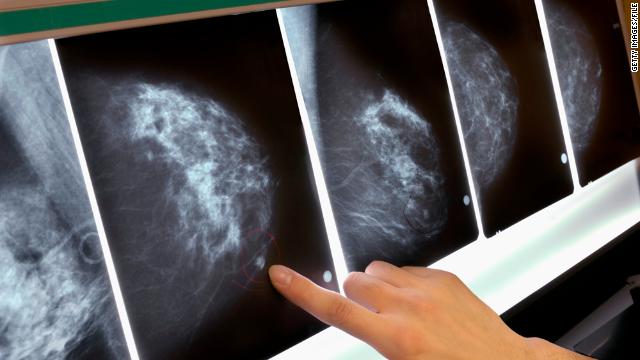
Although drinking alcohol is known to be a risk factor for developing breast cancer, a new study suggests
that alcohol may not have any effect on whether you survive the
disease. In fact, researchers found that being a moderate drinker may
actually improve your chances of survival.
"The results of the study showed there was no adverse relationship
between drinking patterns before diagnosis and breast cancer survival,"
said Polly Newcomb, director of the cancer prevention program at the
Fred Hutchinson Cancer Research Center in Seattle and the lead author of
the study."We actually found that relative to non-drinkers there were modestly improved survival rates for moderate alcohol intake."
The researchers followed close to 25,000 breast cancer patients for an average of 11 years, and found that women who drank moderately - three to six drinks per week - before developing breast cancer were 15% less likely to die from the disease.
More importantly, she says, drinking after diagnosis also didn't appear to impact survival.
"Whether you drink post diagnostically - again, moderately - doesn't appear to adversely impact your mortality," Newcomb said.
So does that mean women who have a history of breast cancer are free to drink up?
"The results of our study would suggest that moderate alcohol consumption after a diagnosis of breast cancer does not adversely impact either breast cancer-specific or overall survival," she said.
Another benefit of moderate alcohol intake - a reduction in the risk of cardiovascular disease in women with breast cancer, according to Newcomb. "Cardiovascular disease is importantly being recognized as a contributor to mortality among breast cancer survivors."
The study found that women who drank those same three to six drinks per week before being diagnosed with breast cancer were 25% less likely to develop heart disease.
The bottom line, says Newcomb? "This is good news for women because it might help direct some of their choices after their diagnosis."
Dr. Sandra Swain, president of the American Society of Clinical Oncology, which published the study Monday in the Journal of Clinical Oncology, agreed the findings are good news for breast cancer patients, but cautioned that more research should be done to confirm them.

FSANZ spokeswoman Lorraine Belanger said irradiated food passed through a radiation field generated by high-energy electron beams, X-rays or gamma rays.
Irradiated food must be labelled and notices placed at sales areas or on menus.
Queensland's Department of Agriculture, Fisheries and Forestry wants the option of an alternative fruit fly control after restrictions were imposed on dimethoate and fenthion, two common chemical insecticides.
"Permitting the irradiation of tomatoes and capsicums will allow domestic and international trade in tomatoes and capsicums to continue without disruption," FSANZ decided.
"Decades of research worldwide has shown that irradiation of food is a safe and effective way to kill bacteria in foods, extend its shelf life and reduces insect infestation," the nation's food regulator said.
Ministers responsible for food regulation have until mid-May to decide on a formal approval.
While herbs, spices, some herbal teas, some tropical fruits and persimmons are already allowed to be irradiated, the bulk has been exported rather than eaten in Australia.
The Federal Government banned irradiation of imported cat food in 2009 after dozens of cats consuming high doses of dry food suffered neurological damage or death.
FSANZ says a dose of up to one kilogray is suitable for tomatoes and capsicums -- well below the levels in pet food.
Anti-irradiation campaigners, including Friends of the Earth Australia, have raised concerns about potential nutritional deficiencies, immune system disorders, and genetic damage.

Exposure to intimate partner violence and
maternal depression before the age of 3 may increase a child's risk of
developing attention deficit hyperactivity disorder (ADHD), according to
a new study published in the journal JAMA Pediatrics.
Researchers at the Indiana University School of Medicine looked a
population of more than 2,000 children, and found that those whose
parents had reported depression or intimate partner violence were
significantly more likely to suffer from ADHD as they grew older."It wasn't surprising, from the lens of me being a behavioral pediatrician," said Dr. Nerissa Bauer, an assistant professor of pediatrics at the IU School of Medicine and the lead study author. "I routinely encounter mental health and behavioral problems in children, and this supports my initial hunch that I was seeing an increase in that."
In addition to the apparent increased risk of ADHD, Bauer and her colleagues also saw an increase in prescriptions for drugs used to treat ADHD.
"What it highlights is that as pediatricians, we have a responsibility and a duty to actively monitor children for behavioral mental health issues," Bauer said.
But she says, time constraints can make that difficult.
"Pediatricians know that it's important to screen. However, in a typical 20-minute visit, it's really hard to balance priorities."
ADHD is often found alongside conditions such as depression and anxiety, said Atlanta pediatrician and CNN Health expert Dr. Jennifer Shu, who was not involved in the study, and "could just be a marker for other mental health problems... which may be linked to the intimate partner violence or maternal depression."
Bauer hopes the research gives pediatricians a red flag to focus in on if there are concerns about the child's behavior.
"If a parent comes in and tell us that a daycare teacher says, 'I'm concerned about how your child's functioning in the classroom,' that pediatrician needs to look for reasons for that."
Likewise, if a pediatrician finds out that a child may be exposed to violence or depression at home, they should look for signs of ADHD, she says. "That pediatrician should consider screening for behavioral mental health issues such as ADHD, and continue monitoring that child over several visits."
The bottom line, Bauer says, "We know that the earlier we can identify these children (with ADHD), the more we can optimize their outcomes."
Inadequate sleep can be a big contributor to ADHD symptoms and behavioral problems, Shu notes, adding that domestic violence or parental depression may lead to children not getting appropriate care - sleep and nutrition, for instance - which could affect their focus and concentration.

Amazing arms exercises
How is getting a stronger, sleeker upper body like math? It's something otherwise smart women think they just can't accomplish. Or they use the excuse of getting too "bulked up." The moves here definitely won't turn you into the Incredible Hulk, but they will get your arms longer, leaner, and ready to bare when the weather warms up. Best of all, most can be done at home using your own body weight—no need to invest in pricey gadgets or gear! Trainer tip: To boost your calorie burn and see results faster, march or jump in place for 2 minutes after completing each move.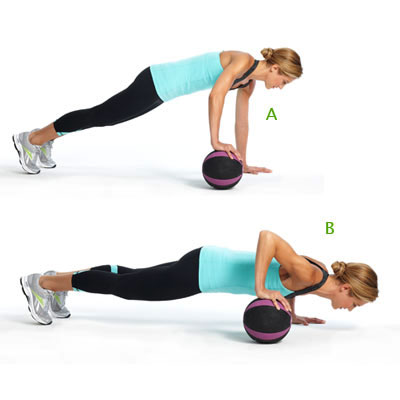
Roll-the-Ball with Uneven Push-Up
Best for: Those who need an upper-body-strength challenge. (Tip: you can use a soccer ball, stack of books, or a medicine ball to create the uneven surface.)How to do it: Get into plank and put right hand on the ball, left hand on the floor. Squeeze your abs and shoulders as you lower towards the floor, keeping elbows in. Push back up and pass the ball to the other side. Do at least 5 on each side.
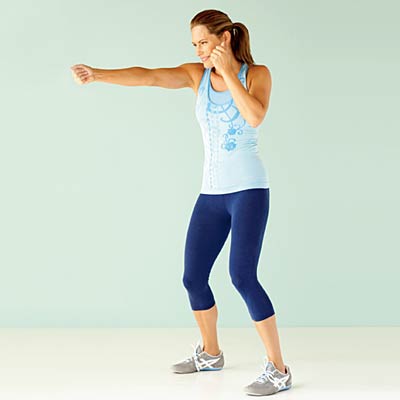
Pilates Boxing
Best for: Pilates and yoga fans who want to burn fat.
How
to do it: Standing with feet a hips-width apart, bend your knees and
hinge forward from your waist, maintaining a neutral spine. Raise fists
to your shoulders and, keeping elbows up, box your right hand forward,
clenching your abs. Bring hands to center and switch. Box on each side
20 times.
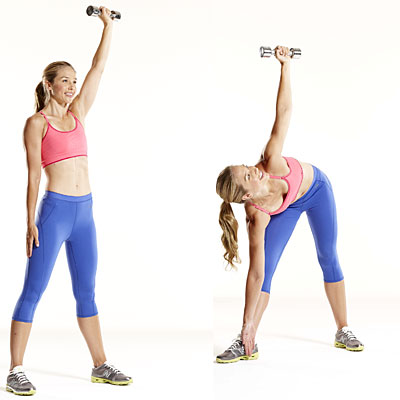
Clean and Press Windmill
Best for: Those who want to work their legs and glutes too.
How
to do it: Stand with feet shoulder-width apart, a free weight between
them. Push hips back to lower into squat and grab weight with left hand.
Push through feet and rise to standing, lifting weight toward left
shoulder and up overhead. Bend at waist to right, allowing right foot to
turn out; right hand is on inside of right leg. Continue to bend
sideways, sliding right hand down to foot, keeping left hand overhead.
Reverse movement to return to squat. Switch sides and repeat.
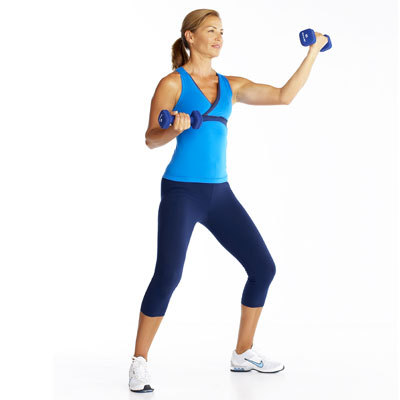
Biceps and Arm Circles
Best for: Exercisers who want a full-body strength workout.
How
to do it: Stand with legs slightly wider than hip-width, a 5- to
8-pound dumbbell in each hand, elbows bent and palms up. Keeping spine
straight, squat and circle left hand up and in toward your shoulder in a
circular motion (as if beckoning someone toward you); reverse to lower
hand. Do 16 reps, then switch sides and repeat.
Triceps Swing
How to do it: Lie faceup with feet on floor, knees bent, a 5-lb dumbbell in each hand. Keep them a few inches off floor. Keeping arms straight, raise left arm over chest while right arm stays over head. Lower to start and repeat. Do 15 reps with left arm, then switch sides. Do 2-3 sets.
Kickback with a Twist
Best for: Firm, sleek triceps
How to do it: Holding a 5- to
8-pound dumbbell in each hand, arms by your sides, stand with your feet
slightly wider than shoulder-width apart. Keeping your back straight,
bend your legs slightly and lean forward from the waist until your torso
is nearly parallel to the ground. Raise your elbows until your upper
arms are even with your back. Your elbows should be bent to 45-degree
angles with your palms facing each other. Keeping your upper arms still,
extend both hands behind you, then rotate your wrists so that your
palms are up. Turn your palms back to face each other and bend your
elbows to bring weights back toward your body to complete the rep. Do 3
sets of 15 reps.
Get-Up Plank
How to do it: Begin in a modified side-plank position with legs stacked and knees bent. Hold a kettlebell (or a water bottle) in your right hand, with your right elbow bent and weight resting against your forearm. Lift your hips so your body is straight from knees to shoulders, pressing kettlebell up to the ceiling. Do 3 sets on each side.
Split Squat Rotation
Best for: Leg, glute, and arm strengthening
Stand with feet
together, holding a 5- to 10-lb medicine ball (you can also use a soccer
ball or a stack of books) at chest. Step left foot back and lower into
squat with right knee bent. Push into right leg, straightening both legs
while twisting torso to push medicine ball over right shoulder; return
to previous position. Continue for 30 seconds; switch sides and repeat.
Opposite Arm & Leg Lift
Best for: Arm and leg strengthening that stretches your back
How
to do it: From all fours, reach your right arm forward; at the same
time, stretch your left leg back and flex your foot. Hold for 5 seconds,
then release and repeat using the left arm and right leg; that's one
rep. Do 10 to 15 reps.

The finding was true for men and women, single and married people, and those with and without children, according to the Ohio State University researchers.
They said their findings suggest that one healthy behavior can take time away from another healthy habit, and that public health recommendations need to take into account the time people have for beneficial lifestyle habits on a given day.
“If we assume, for example, that adults have 45 minutes of free time to allocate to health-promoting behaviors, maybe we need to look at that holistically and determine the optimal way to use that time,” study lead author Rachel Tumin, a doctoral student in epidemiology in the College of Public Health at Ohio State University, said in a university news release.
Tumin and her colleagues found that 16 percent of men and 12 percent of women said they had exercised the previous day. The average amount of time spent exercising was 19 minutes for men and 9 minutes for women.
The average amount of time spent preparing meals that day was about 17 minutes for men and 44 minutes for women.
Overall, men and women spent an average of less than an hour on both meal preparation and exercise on the same day, according to the study, scheduled for presentation Friday at the annual meeting of the Population Association of America, in New Orleans.
Because this study was presented at a medical meeting, the data and conclusions should be viewed as preliminary until published in a peer-reviewed journal.
“There’s only so much time in a day. As people try to meet their health goals, there’s a possibility that spending time on one healthy behavior is going to come at the expense of the other,” Tumin said. “I think this highlights the need to always consider the trade-off between ideal and feasible time use for positive health behaviors.”

Listening to new music is rewarding for the brain, a study suggests.
Using MRI scans, a Canadian team of scientists found that
areas in the reward centre of the brain became active when people heard a
song for the first time.The more the listener enjoyed what they were hearing, the stronger the connections were in the region of the brain called the nucleus accumbens.
The study is published in the journal Science.
Dr Valorie Salimpoor, from the Rotman Research Institute, in Toronto, told the BBC's Science in Action programme: "We know that the nucleus accumbens is involved with reward.
"But music is abstract: It's not like you are really hungry and you are about to get a piece of food and you are really excited about it because you are going to eat it - or the same thing applies to sex or money - that's when you would normally see activity in the nucleus accumbens.
"But what's cool is that you're anticipating and getting excited over something entirely abstract - and that's the next sound that is coming up."
New tunes
To carry out the study, which took place at the Montreal Neurological Institute at McGill University, the scientists played 19 volunteers 60 excerpts of new music, based on their musical preferences.
As they were listening to the 30-second-long tracks, they had to the opportunity to buy the ones they liked in a mocked up online music store.
All of this was carried out while the participants were lying in an MRI machine.
How musical are you?

- Takes 25 minutes on a computer with sound
- Covers listening habits and your emotional response to music
- Tests include tapping out beats, memorising tunes and sorting clips by genre
By analysing the scans, the
scientists found that the nucleus accumbens was "lighting up" and
depending on the level of activity, the researchers could predict
whether the participant was likely to buy a song.
Dr Salimpoor said: "As they are listening to this music, we
can look at their brain activity and figure out how they are
appreciating or enjoying this music before they even tell us anything."And that's part of this new direction that neuroscience is going in - trying to understand what people are thinking, and inferring their thoughts and motivations and eventually their behaviour through their brain activity."
The researchers found that the nucleus accumbens was also interacting with another region of the brain called the auditory cortical stores.
This is an area that stores sound information based on music that people have been exposed to before.
"This part of the brain will be unique for each individual, because we've all heard different music in the past," explained Dr Salimpoor.
The researchers now want to find out how this drives our music tastes, and whether our brain activity can explain why people are drawn to different styles of music.

I routinely throw them into salads of all kinds, and finely chopped walnuts can go into everything from omelets to pungent Mediterranean nut-based sauces to soups, pasta dishes and of course desserts. I consider them a pantry staple and keep a bag of shelled walnuts in the freezer at all times. When unshelled walnuts are available at my farmers’ market I keep them on hand as well. I use them up so quickly that I probably don’t need to keep the shelled walnuts in the freezer, but that’s where I always keep my nuts, because the oils in nuts are volatile and they can become rancid if they are not kept in a cool environment. I toast walnuts occasionally, but most often I prefer the sweeter flavor of fresh untoasted walnuts.
Tomorrow is National Peach Cobbler Day! (A Saturday: Perfect for
baking.) We love celebrating this delicious dessert, but it does happen
to fall smack dab in the middle of beach-body prep time. Not to worry,
it’s possible to use the natural sweetness of peaches to make desserts
that are relatively low in calories, but taste just as decadent as
Grandma’s recipe.
And there’s more good news. When fruits are paired with a little fat, your body can better absorb key nutrients like beta-carotene and lycopene. (P.S. If fresh peaches haven’t made it to your farmer’s market yet, it’s fine to use the frozen variety!)
Try these recipes:
Blueberry-Peach Cobbler
 Pin It
Ingredients: Peaches, lemon juice, granulated sugar, salt, flour, cooking spray, baking powder, butter, eggs, vanilla extract, buttermilk, blueberries, turbinado sugar Calories: 303
Try this recipe: Blueberry-Peach Cobbler
Peach Upside-Down Cake
 Pin It
Ingredients: Peaches, sugar, cornstarch, a lemon, butter,
vanilla extract, an egg, flour, baking powder, low-fat buttermilk,
vanilla fat-free yogurt, fat-free caramel syrup
Pin It
Ingredients: Peaches, sugar, cornstarch, a lemon, butter,
vanilla extract, an egg, flour, baking powder, low-fat buttermilk,
vanilla fat-free yogurt, fat-free caramel syrup
Calories: 307
Try this recipe: Peach Upside-Down Cake
Poached Fruit Over Waffles
 Pin It
Ingredients: Coriander seeds, lemon zest, tarragon, apricots, plums, peaches or nectarines, pears, vanilla extract and whole-grain waffles
Pin It
Ingredients: Coriander seeds, lemon zest, tarragon, apricots, plums, peaches or nectarines, pears, vanilla extract and whole-grain waffles
Calories: 143
READ MORE
And there’s more good news. When fruits are paired with a little fat, your body can better absorb key nutrients like beta-carotene and lycopene. (P.S. If fresh peaches haven’t made it to your farmer’s market yet, it’s fine to use the frozen variety!)
Try these recipes:
Blueberry-Peach Cobbler
 Pin It
Ingredients: Peaches, lemon juice, granulated sugar, salt, flour, cooking spray, baking powder, butter, eggs, vanilla extract, buttermilk, blueberries, turbinado sugar Calories: 303
Try this recipe: Blueberry-Peach Cobbler
Peach Upside-Down Cake
 Pin It
Calories: 307
Try this recipe: Peach Upside-Down Cake
Poached Fruit Over Waffles
 Pin It
Calories: 143


 Steffen ran her
first 5K race in May 2012. She lost most of the 85 pounds by jogging on
the treadmill. "In 2012 all I remember doing was running ... running,
running, running," she says with a laugh.
Steffen ran her
first 5K race in May 2012. She lost most of the 85 pounds by jogging on
the treadmill. "In 2012 all I remember doing was running ... running,
running, running," she says with a laugh. 

Cherie Hart Steffen turned toward her professor in the hall of their community college.
"What?" she asked, sure she had misheard.
"Precious -- you know, from the movie," he repeated.
The students around them started laughing. Steffen could only stare in disbelief. He had just compared her to Gabourey Sidibe's obese character in the 2009 film.
"It was like ... someone hit me with a frying pan on my head," she remembers.
Her mind flashed back to
just six months before, when she had gotten a life-changing call. It was
June 2009. Her mother -- her best friend in the world -- was dying.
Steffen drove all night in hopes of seeing her one last time.
LaVerne Hart managed to
give her youngest daughter just two pieces of advice before succumbing
to the cancer that had spread throughout her body.
"Save money. Lose weight," Steffen recites, her mother's words forever etched into her brain.
Steffen hadn't listened
immediately. A herniated disk in her lower back had prevented her from
working out; grief had made her turn to comfort food. In the months
since her mother's death she had gained 30 to 40 pounds. But that moment
with her professor was the last straw.
"This is it," she thought, as the crowd around her dissipated. "Let's do this."
A model's daughter
Steffen's older sisters
were naturally thin. They took after their mother, who had been a model.
Steffen did not. She grew up "husky" and steadily gained weight
throughout her teenage years.
She and her mother
fought constantly over her size. Hart would push her daughter to lose
weight, but continued to buy junk food for the whole family.
"Bless her heart, she
didn't know how to really deal with it," Steffen remembers. "I'm eating
what everyone else is eating. ... None of her other children looked like
me."
In desperation, Steffen
tried everything from crash diets to extreme exercise to battle the
bulge. At one point, she was eating fewer than 500 calories a day. She
would lose weight for a short time and then put it right back on when
real life won out.
Shopping was miserable.
"They don't really make large clothing that's attractive," she says.
"Everything just looks like a tarp." She longingly watched as her
friends tried on cute clothes and went on dates. Her first kiss was
postponed until college.
Eventually she carried 230 pounds on her 5-foot-3-inch frame.
Slow and steady
The humiliating
"Precious" incident took place in January 2010. That night, Steffen got
on her treadmill at home and walked for 10 minutes. It was rough, but
she promised herself she'd do it again the next day. She was going to
take the weight off no matter how long it took.
Every day she walked
just a little bit longer, a little bit farther. By year's end, she had
lost 30 pounds and worked her way up to a jog. She still hadn't
exercised outside her house, fearing embarrassment.
She would be graduating
soon with a degree in criminal justice, and thought she might make a
good police officer. She started training for the fitness test, but a
stress fracture in her tibia prevented her from attending tryouts at the
academy.
Depression crept in.
Steffen thought about what she really wanted to do. She realized she was
happy with her new health routine. Could she work in the fitness
industry? She did some research and came across the National Academy of
Sports Medicine's certified personal training program.
What to look for in a personal trainer:
1) Evaluate their education. Research their certification and make sure it's from a reputable source like NASM.
2) Make sure their advanced specialization, like nutrition or bodybuilding, fits your goal.
3) Interact with them -- a personality match will help with motivation.
1) Evaluate their education. Research their certification and make sure it's from a reputable source like NASM.
2) Make sure their advanced specialization, like nutrition or bodybuilding, fits your goal.
3) Interact with them -- a personality match will help with motivation.
Personal training is a booming job field, says academy spokesman David Van Daff.
"Everyone is aware
there's an (obesity) crisis, an epidemic," he says. "People are trying a
variety of different methods to improve their fitness levels, but
they're not achieving success independently. They're recognizing they
need a coach, a motivator, who will hold them accountable."
Personal trainers
provide clients with programs to achieve their goals, Van Daff says,
whether that's weight loss, muscle building or overall fitness. The
National Academy of Sports Medicine certification teaches everything
from basic anatomy to kinesiology to motivational techniques.
Van Daff loves to see people who have lost a significant amount of weight become trainers.
"It's helpful for
somebody in this industry if they can relate to their clients from a
personal perspective," he says. "If you have a personal trainer who
knows what it's like to be 20 or 30 pounds overweight ... it helps in
gaining (the client's) confidence."
Steffen passed her
certification exam on her way to losing another 30 to 40 pounds. She
designated 2012 as the year of running: She ran her first 5K in May and
her first half marathon later that year. Toward the end of the year, she
finally joined a gym and began to lift weights.
"(I thought) I look good in my clothes, but do I look good naked?" she says with a laugh.
Now she hits the gym five to six days a week to weight train and run. She also has cleaned up her eating habits.
Steffen eats six small
meals a day that almost always include protein, whether it's chicken,
tuna, Greek yogurt or fish. She has a gallon of water on her desk at
work. ("I'm constantly going to the bathroom," she says.) She's given up
French fries and French bread, possibly her two biggest diet downfalls,
although she gives herself permission to splurge during one meal a
week.
All her hard work has paid off. Steffen has lost 85 pounds and inspires others on her blog,
Moving on
About a year ago,
Steffen ran into her old college professor, the one who had called her
"Precious." She hadn't seen him since her graduation.
Like a scene from a
movie, Steffen dropped an orange and it rolled across the floor. Her
professor picked it up as a million sentences ran through her head.
"I had dreamed of this moment," she says. "I thought I was going to walk into his office and be like, 'Look at me now.'"
Instead she simply said, "Thank you."
"If he hadn't said that, none of this would have happened," she explains. "He still has no clue."
For now, Steffen is
working as a leasing consultant at an apartment complex. But she's
studying to be a fitness nutrition specialist with the National Academy
of Sports Medicine and hopes to eventually get enough clients to be a
personal trainer full time.
She also has her eye on a
few bikini competitions, perhaps as a nod to her mother's modeling
career. She imagines Hart would flip out if she saw her daughter now,
and would immediately want to go shopping.
"She would love that I
listened to her and took her advice," Steffen says. "She would be really
proud of me because I did it the right way.

That's likely why the
idea that hope may wield a significant influence on healing -- and even
survival -- may be tough to take for our bean-counter brains, hardwired
by evolution to seek certainty at any cost.
Shane Lopez, author of the new book, "Making Hope Happen," is unfazed by any such ambivalence.
"I began my career by
studying intelligence and how that relates to good health," he says.
"Sometimes I found it easier to just tell people I was an intelligence
researcher. They reacted like that research was somehow important and
fancy."
When he talks about hope,
people's eyes glaze over more often than not. Nonetheless, Lopez
believes hope is the stuff of change, recovery and healing.
Using downward dogs to treat depression
The positive physiological effects of hope are well-documented, most eloquently in Jerome Groopman's "The Anatomy of Hope," where he writes: "Researchers are learning that a change in mind-set has the power to alter neurochemistry.
"Belief and expectation
-- the key elements of hope -- can block pain by releasing the brain's
endorphins and enkephalins, mimicking the effects of morphine. In some
cases, hope can also have important effects on fundamental physiological
processes like respiration, circulation and motor function."
Groopman's research
showed that during the course of illness, belief and expectation -- two
mental states associated with hope -- have an impact on the nervous
system which, in turn, sets off a chain reaction that makes improvement
and recovery more likely. This process, he points out, is fundamental to
the widely accepted "placebo effect," which is created by a hopeful outlook.
It is less of a stretch
to contemplate the link between hope and emotional well-being. "Have you
ever met a happy hopeless person?" Lopez asks simply.
Groopman observed that
hope does not just involve a mind-to-body connection, but also a
body-to-mind connection, where neural input about one's physical
condition serves as a moderator of positive and negative emotions.
Hope, Lopez says, may buffer us from stress, anxiety and the effects of negative life events. Studies
of workers over time suggest that hopeful employees experience more
well-being. And it comes as no surprise that in a Gallup poll of 1
million people, the hopeful said they laughed and smiled much more often
than the hopeless, Lopez writes, citing an "unpublished analysis of
data from the Gallup-Healthways Wellbeing Index and the Gallup Student
Poll."
According to Lopez, studies also show that hope promotes healthy behaviors, including fruit and vegetable consumption, regular exercise, safe sex practices and quitting smoking.
"In each case," writes Lopez, "hope for the future is clearly linked with daily habits that support health and prevent disease."
That's because hope
triggers a virtuous cycle. Hopeful people conjure a vision that sustains
them, that causes them to show up for the hard work and accept
setbacks, Lopez says. They make an investment in the future that pays
off in the present: in the way they eat, exercise, conserve energy, take
care of themselves and stick to their treatment plan.
The pathways of hope
In 2008, Duane Bidwell,
an associate professor of practical theology at Claremont School of
Theology in California, set out to study hope among children suffering
from chronic illness.
"We felt there was
insufficient theory about hope from children's perspectives," he says.
"Most of the research was based on and extrapolated from adult
experiences and then applied to kids."
Bidwell and his
colleague Dr. Donald Batisky, a pediatric nephrologist at Emory
University School of Medicine in Atlanta, analyzed vast amounts of data
from a diverse group of children suffering from end-stage renal failure.
The researchers identified five main pathways to hope. They are:
• Maintaining identity
by continuing to participate in activities and relationships that help
patients retain a sense of self outside diagnosis and treatment.
• Realizing community
through formal and informal connections that help patients understand
they are not alone in living with disease. This community is made real
through conversation, visitation, consultation and participation in
daily activities.
• Claiming power by taking an active role in treatment by setting goals, self-advocating, monitoring and maintaining one's own health.
• Attending to spirituality, activated through religious, spiritual and other contemplative practices.
• Developing wisdom, which involves both gaining pragmatic, medical wisdom derived from one's own experience and finding ways to "give back."
"The pathways are not
hierarchical in any way," Bidwell says. "You can access hope through any
of these pathways and all of them. The more of them you can access, the
better."
Literature tends to
treat hope as an existential experience, virtue or emotion, Bidwell
says. But the children Bidwell studied revealed that hope is a social
resource. It emerges through interactions with the people who surround
us and is then internalized.
What's important, says
Bidwell, is for the patient's "team members" -- family members, doctors,
nurses, social workers, friends and chaplains, among others -- to do
things that help create and activate hope pathways for the patient.
Hope is present, ordinary and 'normal'
When asked what he found
most compelling or surprising about his findings, Bidwell says his team
asked the children to talk about a time when hope became real during
their disease treatment.
"More often than not,"
he recalled, "they told us about ordinary moments with family and
friends -- saying grace around the dinner table, times when they were
aware of the abundance they had in their lives, even though ... they
build their lives around dialysis and medication."
We so often discount
these ordinary daily moments, Bidwell says. But those who are more
intentional about the practices that bring hope right now are better
able to take care of themselves.
The children in
Bidwell's study experienced mostly psychosocial suffering, he says.
"Things like being different from their peers because they were stuck to
a dialysis machine or always on medication." Hope enabled the children
to claim power -- to say: "Here's where the disease gets to influence my
life and here's where it doesn't get to influence my life."
"I'm normal," Bidwell recalls a young girl telling him. "Hope helps me be more normal."
What hope is -- and isn't
There is a thin line between hope and denial, and that line is an unwavering commitment to truth and reality.
Groopman writes: "False
hope does not recognize the risks and dangers that true hope does. False
hope can lead to intemperate choices and flawed decision making. True
hope takes into account the real threats that exist and seeks to
navigate the best path around them."
Both Lopez and Bidwell
emphasize that hope is not about positive thinking. Hope is half
optimism, Lopez explains. The other half is the belief in the power that
you can make it so.
There is a profound
difference between hoping and wishing, he continues. Wishing encourages
passivity, whereas hope represents an active stance.
"Wishing is the fantasy that everything is going to turn out OK. Hoping is actually showing up for the hard work."

